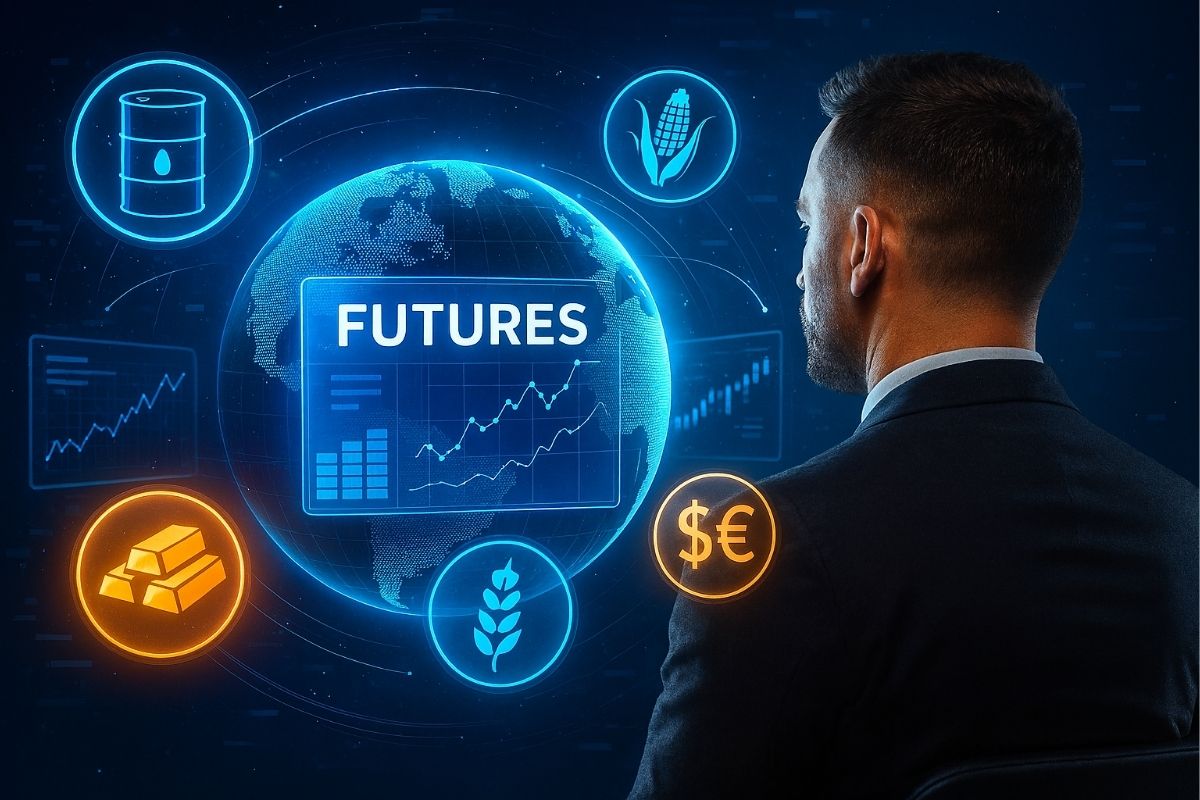
When individuals consider trading, they often envision investing in equities or trading currencies. However, one of the most significant drivers behind global prices and business strategies is less visible: futures contracts. These contracts not only facilitate the transfer of money, but they also enable industries to mitigate risk, stabilize and plan for the future .
What Are Futures, Exactly?
A futures contract is simply a promise to either buy or sell an asset at a predetermined price at a specific date in the future. The asset can be anything — oil, a currency, gold, a commodity like wheat, or even a stock index.
Traders will buy and sell contracts in volume far greater than the actual physical commodity. Most traders never had any intention of actually receiving a bag of wheat, or a barrel of oil; they are simply trading the expectation of the price.
Futures contracts serve two basic functions:
- Hedging: Locking in prices, protecting against the price change
- Speculating: Trying to make money on the direction prices will move
This combination keeps the market active and liquid.
The Effects of Futures on Daily Life
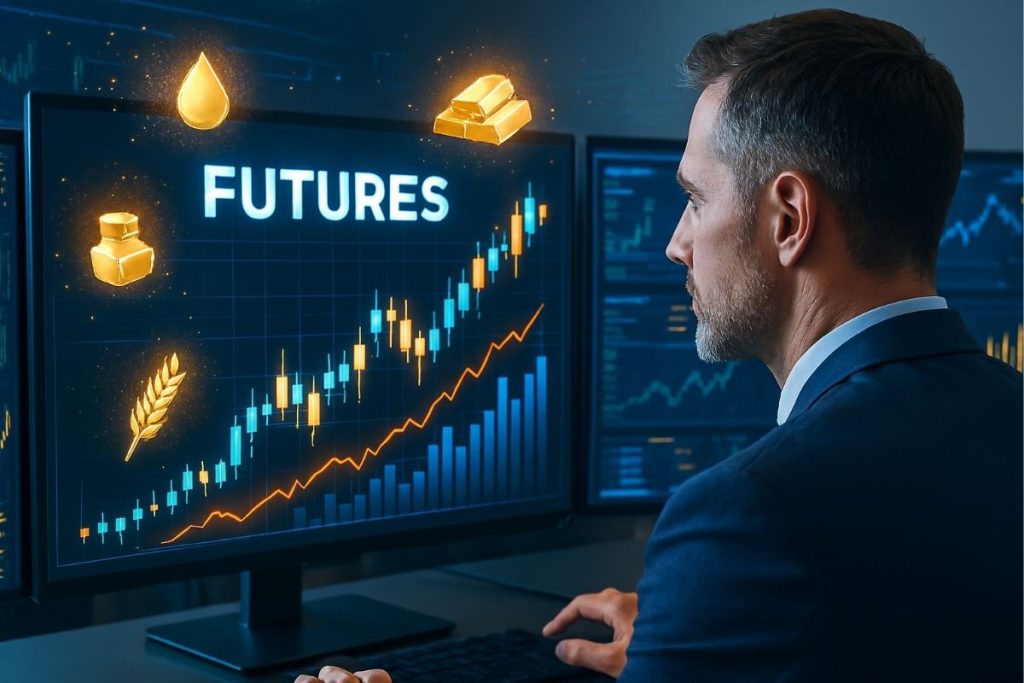
Whether or not you’ve traded a futures contract, you experience their effects every day:
- The price of gasoline is heavily dependent upon oil futures
- Bread prices are attached to wheat futures.
- Airlines will hedge a fuel price to stabilize ticket prices.
- Farmers use futures contracts to price crops many months and sometimes years before harvest.
In other words, futures allow businesses and consumers to plan for price fluctuations.
Who Participates — and Why
Futures contracts draw many types of traders:
- Hedgers
Businesses or producers trying to reduce risk. Futures contracts are used by farmers, airlines, food manufacturers, and energy companies to lock in pricing stability.
2. Speculators
Traders looking to make money from market fluctuations. Adding liquidity to the market allows hedgers the option of entering or exiting positions more easily.
3. Institutional Investors
Large funds will use futures to rebalance their portfolios quickly or gain exposure to a market without buying the underlying assets.
Different Types of Futures Markets
Futures contracts exist for a wide range of assets:
- Agricultural commodities (corn, soybeans, coffee, sugar)
- Energy (crude oil, natural gas)
- Metals (gold, silver, copper)
- Financial instruments (stock indices, Treasury bonds)
- Currencies (the major global currency pairs)
This variety allows companies across all industries to hedge their risk.
What Helps Futures Prices Reflect Value
Futures prices reflect what trading thinks the value of an asset will be the future.
Some of the factors that contribute to futures prices include:
- Spot price of the asset
- Expectations of supply and demand
- Cost of storage and transportation
- Seasonal trends
- Current business conditions like i.e., interest rates or inflation.
For example, if traders believe that their will not be a good wheat harvest the next crop year, wheat futures will rise long before wheat is harvested.
How Futures Are Different From Other Financial Products
Futures are unique because they are:
Standardized
All contract sizes, dates, and terms are determined by exchanges. Therefore, every trader has the same futures contract for crude oil or gold.
Highly Leveraged
You only need a small margin deposit to control a much larger contract. This may increase the potential profit—but it also increases losses.
Obligatory
With futures, unless the position is closed prior to expiration, settlement is required—unlike options. This is why most traders close the contracts early.
The Double-Edged Sword of Leverage
Leverage is one of the most attractive elements of trading futures. A small margin can control a position that is worth tens of thousands or hundreds of thousands of dollars.
But, leverage also means:
- A small move in the market could mean a large gain
- A small move in the market could mean a large loss
- Traders may get margin calls if the market is against them
- This is why risk management tools, such as stop-loss orders, are essential.
Potential Risks to Evaluate
While futures contracts are powerful, futures contracts have drawbacks:
- High volatility is a strong consideration: The price can easily change, quickly and randomly.
- Liquidity risk: Less popular contracts may be harder to buy or sell.
- Basis risk is another consideration: The price of the future does not perfectly correlate with the spot price in the real world, as both prices are not perfectly correlated.
- Complexity: Understanding the specifications of the contract being traded is essential, or you could make a costly error.
Understanding these four risks is important before you enter the market.
Why Futures Are Significant To The World Economy
While futures contracts trade on exchanges that are as open to other traders, they are a specification for the price movement in the world. Many of the producers of food (grain) to metal, to energy explorers, financial institutions, or even governments care about the prices of futures in their decision making.
Examples are numerous:
- Oil futures price influence the price of “energy” to all of the world.
- The food producer uses grain futures prices to influence the production and distribution of those goods.
- Metal futures prices influence the price of metals similar for construction and electronics.
Futures markets are essentially a global forecasts almost.
The Role of Technology in Futures Trading Today
Futures trading has embraced technology faster than any other financial product:
- Electronic trading has replaced the traditional trading floor
- The introduction of instant data tools has provided traders with real-time analysis of the markets
- Automated trading systems can now execute strategies with precision.
- There are many new products – such as carbon credit futures and futures on cryptocurrencies – entering the markets.
- The development of blockchain technology may eventually facilitate faster clearing and settlement.
- This modernization has made futures trading easier, more available, and more accessible than it has ever been.
Why Speculators Love Futures
Speculators play an important role in volume and liquidity and do so for several reasons. They typically take positions in futures for:
- The potential to earn a profit either way … bull or bear market
- The high liquidity available in the bigger contracts
- Leverage to magnify profits
- Transparent and regulated exchanges
- Economic news and global events create opportunities
Though speculators do not enter futures contracts to receive delivery, they are vigilant in providing liquidity to keep the markets operating as they should.
The Future of the Futures Marketplace
The futures space is changing and new trends are developing:
- More and more carbon credit futures are showing up due to increased sustainability initiatives.
- Futures based on crypto assets have become mainstream.
- Technology enhancements may bring down costs and increase transparency into futures contracts.
- More and more industries are adopting futures as their primary means of mitigating risk.
With global markets interconnected more than ever, futures products will still be relied on to manage risk and help shape market expectations.